orderflow
 B2B Order Processing Automation: How ADV Teams Recover 80% of Their Time
Your ADV team spends 60% of its time on data entry. Here's how automating B2B order processing recovers 80% of that time for high-value customer work.
++
A high-performing ADV team should spend most of its time on customer relationships. Confirming commercial terms. Handling urgent requests. Anticipating shortages before they become incidents. Resolving complex complaints before they become disputes.
In virtually all Moroccan industrial companies, it spends 60 to 70% of its time entering data into an ERP.
This is not a management problem. It is not a skills problem. It is an organisational design problem: people with the capabilities for commercial coordination, customer insight, and handling the unexpected are being used as data entry operators. Manual re-entry does not require their skills. It consumes their time and energy, and it leaves genuinely valuable tasks without resources.
This article is aimed at general managers and commercial directors as much as ADV teams themselves. It describes what automation concretely changes, how to deploy it in the Moroccan context, and what teams do with the time they recover.
What an ADV Team Actually Does in a Day
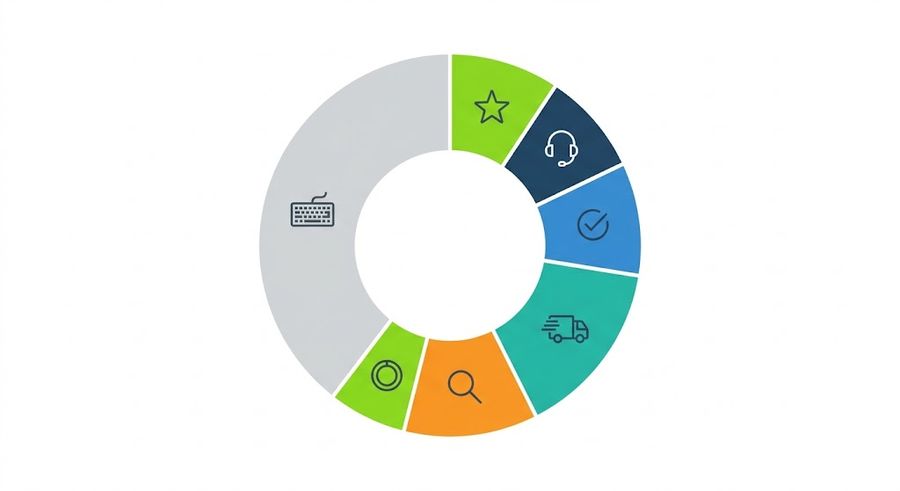
Before talking about solutions, the diagnosis needs to be precise. Here is how time is distributed in a standard ADV team in a Moroccan industrial company handling 300 to 600 orders per month.
Re-entering orders into the ERP accounts for 40% of available time. This is the most voluminous, most repetitive task, and the only one for which the team's relational and commercial skills are completely irrelevant.
Checking and correcting entry errors accounts for 15% of time. This task would not exist if the first one did not. It is entirely generated by manual re-entry.
Sending manual order confirmations accounts for 10% of time. Writing or copy-pasting a confirmation email for each order processed. A zero-value task, entirely automatable.
Tracking deliveries and following up with carriers accounts for 15% of time. This task mixes automatable work, checking a delivery status, with tasks requiring human judgment, handling a carrier incident or a partial delivery.
Handling complaints and disputes accounts for 10% of time. This is genuinely valuable work. It requires customer understanding, internal coordination, and often the ability to find an acceptable commercial solution. In most ADV teams, it is handled urgently in the gaps between two re-entry sessions.
Genuinely value-adding tasks—customer advice, urgent request management, proactive commercial coordination—account for 10% of time. This is what the ADV team was hired for. This is where customer relationships are built or eroded.
These figures are not theoretical estimates. They are recognisable by any general manager who has spent an hour observing their ADV team at work.
The Three Levels of ADV Automation
To automate an ADV team in a B2B industrial company in Morocco, the three automation levels to deploy in order are the following.
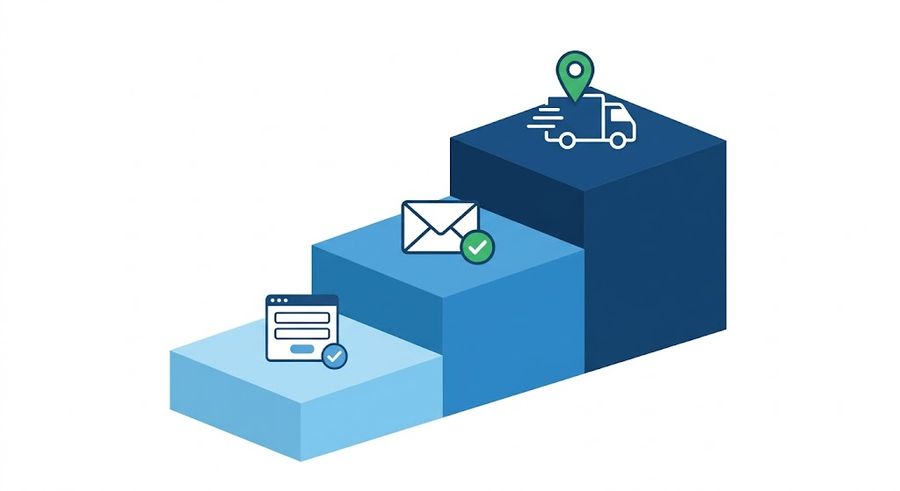
Level 1: order entry automation. This is the entry point. Orders received by email, PDF, Excel, or free text enter the ERP without human re-entry. The agent reads the incoming document, extracts the data, validates it against the ERP reference data, and creates the order. The ADV operator intervenes only on exceptions, representing 3 to 7% of the flow depending on the variety of incoming formats. This level eliminates 40% of ADV time spent on entry and reduces the error rate from 3 to 5% down to under 0.3%. Deployment timeline on a homogeneous flow: 3 to 6 weeks.
Level 2: confirmation automation. As soon as an order is created in the ERP, a structured confirmation is sent automatically to the customer. Order number, summary of confirmed lines, expected delivery date, mention of any exceptions. Zero manual drafting. Zero delay between order creation and customer notification. This level is included in the Level 1 deployment. It eliminates the 10% of ADV time spent on manual confirmations and removes the main source of customer follow-up calls: "did you receive my order?"
Level 3: delivery tracking automation. The agent connects to the carrier's system or to the WMS to track delivery progress and send automatic updates to the customer at each stage: order prepared, departed warehouse, estimated delivery, confirmed delivery. The ADV team intervenes only on real incidents: unplanned delay, partial delivery, carrier dispute. This level frees up the 15% of ADV time spent on manual tracking and carrier follow-ups. Deployment timeline: 6 to 12 weeks depending on the systems in place.
The three levels combined recover between 65 and 80% of ADV time currently spent on tasks without added value. This is not a high estimate. It is the standard result observed after a complete deployment on an industrial order flow.
What the ADV Team Does With the Time Recovered
This is the question automation projects rarely ask. Yet it is the most important one from a management standpoint.
An ADV team that is no longer on data entry does not do the same things in less time. It does different things.
It manages key accounts proactively. Outbound calls instead of waiting for orders. Verifying that negotiated terms are being applied correctly. Anticipating end-of-quarter needs. These interactions build customer relationships in a way that reactive order management does not allow.
It detects weak signals. A customer who was ordering 40 units per week and has been ordering 20 for three weeks. Without automation, this signal drowns in the entry flow. With automation and a per-customer order dashboard, the ADV team sees it and alerts the account manager before the customer switches to a competitor.
It handles complaints in under 2 hours instead of 2 days. Not because it works faster, but because time is available when the complaint arrives, rather than handling it between two re-entry sessions at the end of the day.
It anticipates stock shortages. By crossing incoming orders against real-time available stock, the ADV team identifies supply tensions before they become delivery incidents. It coordinates with purchasing and alerts the customer with a solution before the problem is visible.
None of these activities require additional hiring. They require that the time exists to perform them. Automation creates that time.
MANUFACTURING
READY TO AUTOMATE?
Automate your order intake end-to-end
From email to ERP in seconds — no manual entry, no errors.

++
+